
Member Spotlight - July 2025
A Legacy of Coaching
Celebrating 30 Years of ICF
ICF Member since 1998
Every coach's journey is unique. Can you share a bit about your journey?
When I think of my journey, I think about what has made this journey worthwhile? What has made me feel the most alive?
For me, it’s the moment when I am coaching an executive with a really complex challenge, and the executive creates their own clarity. Their upgrade in perspective sparks them to spontaneously describe the solutions they were looking for. This is a moment of magic that I could not have planned. It is co-created through our connection and mutual commitment. I usually sit back and observe this moment feeling a little awe. That magic of coaching never gets old!
I am a Master Certified Coach, and I focus on just one thing: help senior executives at Vice President and C level play the corporate game more skillfully, so that they win. I love this work because it matches my personal values. What has always gotten me out of bed in the morning, my “why”, is “to contribute and to find a better way.” I have been fortunate that I have coached leaders and teams in 57 different companies. I estimate I have delivered over 8,000 individual coaching sessions.
Before becoming an executive coach, I was a corporate executive at a major insurance company in healthcare. I led an Operations team of 700 people in New Jersey and another 150 people in New York. We paid claims to doctors and patients, including a call center responding to hundreds of calls every day. Lots of urgency, lots of stress. However, the part of my job that I loved the most was the leadership meetings with my managers, when we debated how we were going to get 50 people or 100 or more people on our teams to move in the same direction with the same vision and the same goals.
Over time, I realized that what I really wanted would be to spend my whole day focused on leadership. It took a long time for me to decide what to do, because I loved the company, and who leaves a corporate job with great benefits? However, I decided to leave and follow my intuition. Fortunately, a friend recommended I hire a coach to help me figure out my future. When I experienced coaching as a client, I felt like I had come home. Within a few months of leaving, I started training to become an executive coach.
As we celebrate the International Coaching Federation’s 30th anniversary, how has ICF New Jersey evolved based on your personal experiences?
What stands out most for me is the sheer number of coaches! I had the honor of being the very first President of the ICF New Jersey Charter Chapter. We used to meet at the Marriott Hotel at the airport. I would arrive and be delighted if we had four or five coaches attend! When we got rolling and had 10 or 12 coaches, it was a big deal. Now look at us…a wonderful community of coaches that support each other. The biggest benefit of ICF New Jersey membership is that we have a caring tribe of people who know what each other is dealing with and are always ready to help each other.
What are key insights you have gained during your coaching journey that shaped your business?
➡️My number one job as an executive coach (also true for a leader) is to evolve, to become my best self…and the business will grow.
I found a surprising direct correlation between the success of my coaching business and my own personal development. If you drew a line graph of the growth of my business revenue, it ran parallel to a line of my development as a person. (And it takes more than positive affirmations on abundance.) It is critical to have strong business practices for marketing and execution of a coaching business. In addition, as I worked on my own confidence, as I practiced saying no, as I raised my own standards and started personally playing bigger, my revenue grew in direct proportion. Since I started coaching, I have always had my own coach, different coaches for different goals. To this day, I still write down my own personal goals and paste them on my bathroom mirror.
➡️Delivering executive coaching for senior executives, particularly at C level, is a whole different ball game.
It is just a different type of coaching. The reason I chose to specialize in this area is because it is endlessly fascinating. Once you cross over to VP level and beyond, the corporate game changes significantly. Organizations don’t always do a great job preparing leaders for how the game changes. I have often coached newly promoted VP or SVP leaders who say: “When my kids ask me what I do, I say that I go to meetings all day. Then the kid says: But what do you actually do? And now I am asking myself the same question. What do I do now at this higher level?”
It can be paradoxical for a leader. You just got promoted, so you know you are doing well but inside you can be feeling less secure than you felt at earlier levels of your career. Part of the fun of senior coaching is that there is a whole new value proposition that the leader and the coach are creating.
➡️The ROI (return on investment) of a company investing in a coaching engagement is an essential part of the coaching.
As the coach I am always balancing the leader’s development with the benefit to the company. ROI is an early conversation and one that we revisit. I enjoy the challenge of maintaining this delicate balance. As the coach, I am not telling a leader specifically what to do. I am creating a space within which the leader evolves. That space needs to allow us to co-create new perspectives, that serve as springboards for the leader’s evolution, both as a leader and as a human. The delicate dance is that we want this expansion in the leader’s development to also produce business results.
How has your coaching style evolved over the years?
➡️From “Performing… to Connecting”:
I shifted my coaching style from focusing on doing coaching “correctly” to focusing on being “connected.” In my early coaching days before every session, I studied coach training class notes and put a lot of pressure on myself to do it right. I was highly focused on my performance as the coach; I wanted to do a good job. However, I learned that the coaching that was most valuable to the client was when I focused on being fully present and connected. This is why I respect the ICF Core Competencies. It really is all about the beauty of the Coach’s Presence (competency #5). Yes, even in corporate coaching of C Level execs.
➡️From “Hearing the Whole story… to Laser it”:
Sometimes clients have a long and complicated story, and they feel they must give you lots of detail. It is understandable that people want to be heard, and they can be upset about an important issue. However, especially in corporate coaching, we don’t get a lot of time with busy executive clients. So, my coaching style evolved to help clients develop the skill to “laser it” and to share the essence of their situation concisely and quickly. Then we use more of our time together on exploring solutions. This also means that as the coach, I listen even more deeply, and more empathically. So, it sharpens my skills too.
➡️From “Original Agenda… to Going Deeper”:
Originally, I followed formal training, i.e., as the coach, you follow the client’s agenda. However, sometimes the client is so focused on their immediate issue, that they may miss larger opportunities for growth. For example, I have frequently coached leaders who have a very difficult boss or Board, and the client’s agenda is around what to do about them. So, coaching can look at strategies for better clarifying the boss’s expectations, or giving others feedback, or understanding the boss/Board’s perspective. My style changed to go much deeper and explore the role the client is playing (with client permission). There are so many dynamics that can be at play underneath the surface agenda. Sometimes we found the real issue was that the client was overly seeking approval, or the client was not skilled at seeing the bigger vision, or the client truly did not appreciate how the game is played at the more senior levels. It has been said that sometimes excellent coaching is helping the client see that their problem is larger than what they thought. My clients tell me that they appreciate when we get to the root cause.
How do you integrate technology into your coaching practice?
Amazingly, I use pretty basic technology, nothing fancy. I use Zoom or Microsoft Teams for both individual coaching and group coaching sessions. I have a website that helps prospective clients learn about my services and my coaching style through text, video, and audio clips. I also use a platform to sell the leadership books I write (Amazon). I have an iPhone. That is all I need. (My more tech-savvy friends would disagree!). I do have a tech assistant for anything else.
Can you share an unexpected lesson you learned from a client?
Years ago, I learned from one of my clients about how not to be tentative when it is time to take bold action. Taking bold action is a fairly common thing that we coach our clients on; but full disclosure: when I first started coaching, I personally struggled with being tentative in certain areas. I would sometimes hold back on taking a bold action and think, “Maybe it’s not my place to do that…or stay in my lane….”. My coach at the time had said to me that it looked like “I was waiting for permission” to do certain things. Later, I learned from one of my clients who was in healthcare where bold action can change lives. This client said they were trained, “If something has three characteristics: it is serious, frequent, and preventable…then that is all the license you need to act.” I found that so wise, unexpected, and I shifted.
How do you stay motivated as a coach and business owner, and can you share any best practices to keep you at the top of your game?
Staying motivated is critically important for a sustainable and successful coaching business. What helped me most was learning how to deal with feeling discouraged. In my first year of coaching, my revenue was zero dollars. Zero. And remember, I quit my great corporate job to go out on my own and do this! So that first year I was very discouraged. The self-doubt voice in my head was loud.
A few practices helped me overcome discouragement and stay motivated. I connected regularly and deeply with a close inner circle of people who believed in me, even when I did not believe. I had my own coach helping me see and let go of old, limiting beliefs I did not know I had, about what I was capable of. I continually upgraded my business marketing skills. I relied on my vision of my successful future and replayed that vision daily until I could feel it and live it vs. just think it.
Today I still use these practices. Every January I still create a vision for my year and evaluate my progress regularly. I also practice my self-awareness including mediation, yoga, and philosophical training. Continuous learning keeps me interested in playing at the highest level I can. The best practice I can do to grow my business is to keep growing myself.
How do you balance your professional life with personal well-being?
I learned the lesson of work-life balance the hard way, by doing way too much. Early on in an effort to build the business, I went overboard to please others. I learned this is not necessary and actually hurts business growth. I now believe: “After me, you come first…right after me…”. When I started practicing very strong boundaries around my time, work-life balance became easy. Now, I am very good at saying no and have plenty of time to do what I want to do. I learned this from another Master Certified Coach who coached me on time management. Her famous quote to me was: “There is no such thing as Time management. There is only Self- management.”
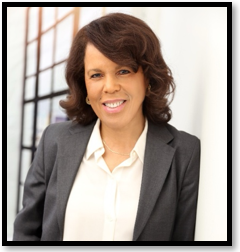
Our appreciation to Val for her dedication and for being a valued member of the ICF community. Val lives in Morris County. Reach out and connect with her at www.valwilliams.com or LinkedIn: https://linkedin.com/in/valwilliams1.