
Member Spotlight - May 2025 - Divya Manchanda
Divya Manchanda, ACC, NLP,
Integrated Professional & Systemic Team CoachC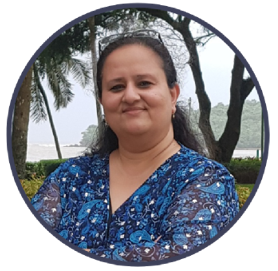
Can you introduce yourself to the community?
After over two decades of corporate career in Strategic HR & Org Development across industries, geographies and global/regional leadership roles, I decided to start my own Coaching and Consulting practice to give shape to my purpose and calling. That is where I formed 'Quest Awaken' last year. Since then, I have been working with both organizations and individuals in their own meaningful quests big or small to create sustainable growth, meaningful impact, and ultimately, to lead fulfilling lives. That is a little background on my work experience.
I come with a background in physics, a master’s degree in organization development, a credentialed coach with ICF at the ACC level, currently working toward my PCC. I’m also an NLP practitioner and Systemic Team Coach. I continue to learn, grow, and enhance my craft as both a coach and consultant. My focus is on transformational coaching, where I blend neuroscience into coaching practices. I look at beliefs, behaviors, and unconscious patterns and partner with individuals to help them move from their current state to their desired state to create the impact they seek in their lives.
What’s been the most challenging aspect of your coaching career, and how did you overcome it?
The biggest challenge has been my own self-mastery journey. Before I could effectively coach others, I had to work deeply on myself, my fears, limiting beliefs, unconscious patterns, and inner transformations. Recognizing and reframing my own challenges into possibilities was pivotal. I realized many people go through similar struggles but seldom ask for help. It does not have to be a lonely or overwhelming journey if you have support. Self-mastery is an ongoing journey. One of the quotes that has stayed with me since childhood is: "Learn as if you were to live forever; live as if you were to die tomorrow." It shaped my commitment to meaningful learning, forgiveness, kindness, and living lightly. Another challenge was managing my deep empathy. While empathy is a strength, it can be overused and become a derailer. I had to learn compassionate detachment staying fully present with clients while not becoming entangled in their stories. Being a “clean mirror” empowers clients to acknowledge, process, adapt, and act.
Can you describe a time when a client’s breakthrough was particularly meaningful for you?
One client I worked with struggled with identity, purpose, wellbeing, and deeply held limiting beliefs. After a few sessions, she shared, "I used to dread sleeping because waking up meant facing another day. Now, I sleep with excitement, looking forward to a new day." That statement gave me goosebumps. Her relationships with herself and her family improved, and her zest for life returned. That moment reaffirmed my purpose to walk alongside people in meaningful transformations.
How has your coaching style evolved over the years?
In the beginning, I was very focused on “doing it right,” adhering closely to ethics, competencies, and structure. While noble, it sometimes pulled me too much into the process. Over time, I learned to trust the process and my presence more, realizing the magic is in the client, not me. Now, before every session, I offer a silent prayer to be an instrument for the client's highest good. I coach with greater fluidity, intuition, and experimentation, offering practices like visualization or energy techniques as options, always empowering the client to choose. Letting go of control has helped me coach more authentically and with deeper impact.
What are some common misconceptions about coaching that you have encountered, and how do you address them?
Coaching is often confused with mentoring, consulting, or therapy. People assume coaching is only needed when something is wrong. But coaching is about unlocking resourcefulness, purpose, and potential, not fixing something broken. I tailor my explanation depending on who I'm speaking with; data-driven individuals may need a different articulation than intuitive ones. Meeting people where they are, without judgment, is key to increasing understanding.
What piece of feedback from a client has had a lasting impact on you?
Rather than a single feedback, it has been an organic realization: clients, after deep emotional sessions, would express concern like, "I just dumped so much on you, are you okay?" That stayed with me and reminded me of the importance of maintaining energetic hygiene. Practices like meditation, breathwork, spiritual rituals, and walks in nature help me stay connected but not impacted, keeping my vessel clean and my energy protected. Leaving corporate life taught me the value of intentional rhythms. I honor healthy boundaries, structure my day with a sense of fluidity, and consistently check in with myself: "What makes me feel most alive? Am I fulfilled?" When needed, I pause even for two minutes to breathe, hydrate, or realign. I listen to my inner voice and respect my physical, emotional, and spiritual needs daily. It is less about rigid schedules and more about intentionality and being present with myself.
What are some of your go-to resources for staying current in the coaching field?
I stay open to learning through books, experiences, and people across disciplines—psychology, science, spirituality, and leadership. I do not seek knowledge solely for application; I learn for the joy of it. Everything finds its place intuitively when it is meant to. Learning nourishes my soul.
What is one opportunity that you gained through ICF New Jersey Charter Chapter?
Joining ICF New Jersey gave me a profound sense of belonging. I participated in various Communities of Practice where I encountered incredible collective wisdom. During personal transitions, these spaces allowed me to be vulnerable, supported, and deeply seen. The connections, inspiration, and sense of safety I found continue to fuel my growth as a person and coach.
What is the best reward of being an ICF New Jersey volunteer?
Volunteering helped me grow both professionally and personally. Showing up authentically led to unexpected opportunities. After volunteering at an in-person event last year, I was invited to co-lead a Community of Practice, a role I had not even envisioned for myself. It reaffirmed that when you serve with joy and authenticity, the right doors open naturally.
What ICF group do you co-lead?
I co-lead the Life and Career Coaching Community Group for ICF New Jersey along with Debra Levy. We meet the second Tuesday of every month at 10:00 a.m. EST. We also hold in-person meetings twice a year, and details are announced beforehand.
What is the best way for people to connect with you?
You can reach me at [email protected] or visit www.questawaken.com.
Let’s engage, celebrate, and get involved in our community’s transformation! — Member Engagement